
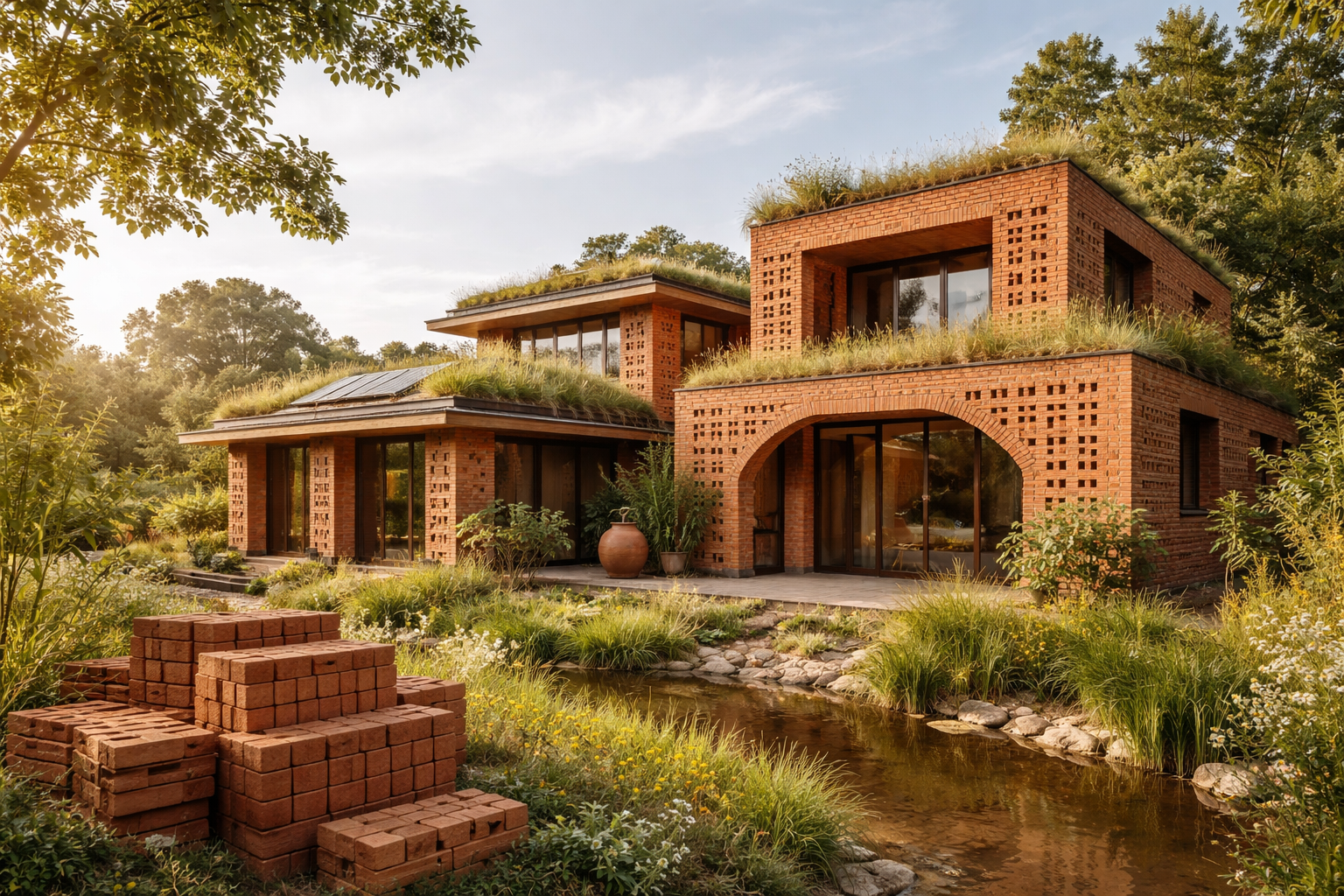
As the world moves towards green building and sustainable development, builders and artists use traditional materials. Clay brick is an environmentally friendly, durable, and attractive option, making it a future-ready choice. Long before the phrase “eco-friendly architecture” became popular, people in India had been utilising clay to build for hundreds of years. This method is still used today.
Our Timeless Clay brick Legacy
Clay brick architecture has long been a symbol of strength, sustainability, and timeless design. In India, structures like the Qutub Minar in Delhi, the world’s tallest brick minaret, highlight the ingenuity of early Indian builders. Similarly, the ruins of Nalanda University in Bihar once a global center of learning reflect the sophisticated use of baked clay bricks in ancient institutional architecture.
Internationally, clay brick has played a central role in iconic constructions. The Ziggurat of Ur in Iraq, dating back to 2100 BCE, is one of the earliest examples of monumental brickwork. In contrast, the St. Pancras Renaissance Hotel in London stands as a 19th-century marvel of Victorian brick architecture.
As sustainable construction practices gain momentum, clay brick is being rediscovered for its natural insulation, longevity, and low environmental impact. These heritage structures remind us of clay’s enduring relevance in both historic and contemporary architecture.
Naturally Sustainable and Climate-Responsive
Clay bricks brick are one of the most environmentally friendly choices you can make right now. They utilise natural materials that are readily available and easily accessible. They also use less energy to make than artificial materials. Unlike items that have been chemically treated, clay doesn’t release any harmful chemicals or pollutants. It doesn’t significantly harm the environment, which makes it an excellent choice for green building standards and healthy building practices.
In terms of its effectiveness, clay is an excellent heat absorber. This makes houses cooler in the summer and warmer in the winter, so they require less air conditioning. It allows moisture to escape instead of getting trapped, so the inside stays dry, and there is a lower chance of mould or other water-related problems. Since India has a diverse range of weather conditions, clay works well there.
Beauty That Evolves with Time
One great advantage of clay bricks tiles is that it retains its appearance over time. When fake things fade or wear out, clay stays beautiful. The time it spends outside gives it a rich, worn look that only adds to its character. Putting clay bricks on the outside of a building gives it a unique look—they’re rough to the touch and beautiful in their simplicity.
The colours of clay are always in style, from dark brown to soft earth tones. This colour scheme not only looks good outside, but it also brings nature into towns, which makes buildings feel friendlier and more open.
Conclusion
There is a wealth of historical information that can help you design buildings more eco-friendly. This is very clear when we cover it with clay. When builders choose an eco-friendly material, they also pay tribute to knowledge that has been passed down for hundreds of years while still meeting the needs of today. clay has a rich history and a promising future, so it’s not just a fleeting trend. It’s a way to live that won’t harm the earth in the long term.