
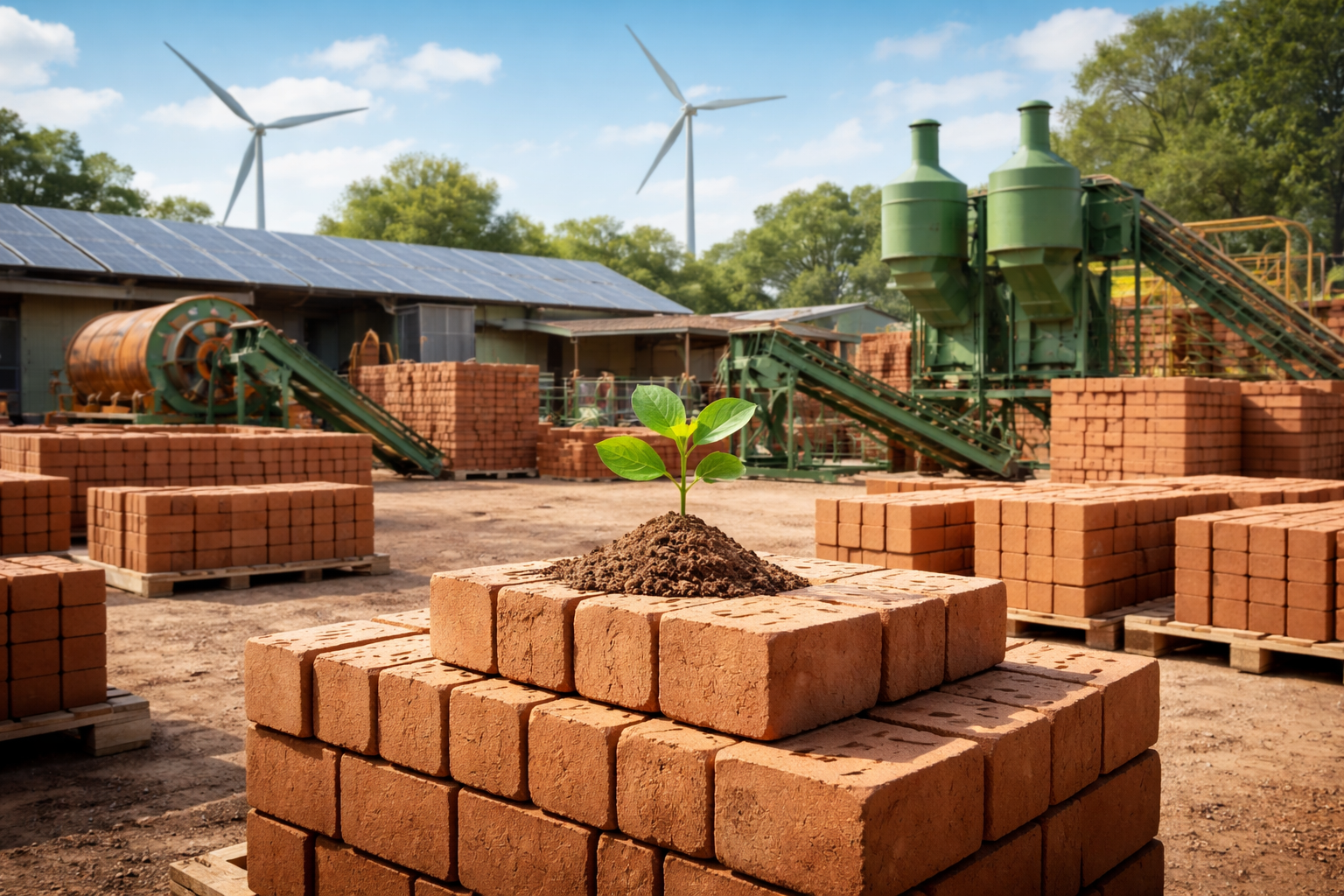
Green manufacturing of clay bricks is becoming an important input towards reduction of carbon footprint of structures as the construction industry is increasingly being pressured to reduce its impact on the environment. There are several things that can be done to make clay brick even more environmentally friendly. To start with, it should incorporate advanced technologies in the kiln and use of energy efficient materials to enhance the manufacturing process to reduce the amount of energy consumed even further and the emission of greenhouse gases. By combining old material with new environmentally-friendly techniques, the clay brick makers are adding to the creation of a cleaner future building brick by brick.
Understanding the Carbon Footprint in Brick Production
The conventional brick making processes require the fossil fuel and inefficient kilns producing a significant amount of greenhouse gases which can be energy-consuming. Emission saved through the process could be enormous in all stages, though through sustainable techniques to produce clay bricks:
- Getting natural raw materials from nearby areas to cut down on emissions from transportation
- Using renewable energy sources like biomass or solar power
- Recycling process heat and waste materials
- Making kiln technology work better for cleaner, more efficient firing
Benefits of Sustainable Clay Bricks
Bricks made of clay are strong naturally, recyclable and durable. This would mean that the building would not need to be replaced regularly which would be better in the long run to the environment.
The most significant environmental advantages include:
- Lower embodied energy than synthetic and concrete buildings
- Greater thermal performance, implying that fewer resources are consumed in heating and cooling buildings
- Reuse in landscaping or other construction applications, since broken bricks can be recycled.
The circular economy can be supported by builders who use the clay bricks that were produced in an environmentally friendly manner to earn Griha green building credits.
Conclusion
A viable and scalable solution to lower the carbon footprint of the construction sector is through sustainable clay brick manufacturing. Clay bricks from Jindal Bricks are a low-impact, high-performance construction material for projects that care about the environment. This is because they are made in a way that is better for the environment and are sourced in a way that is also better for the environment.