
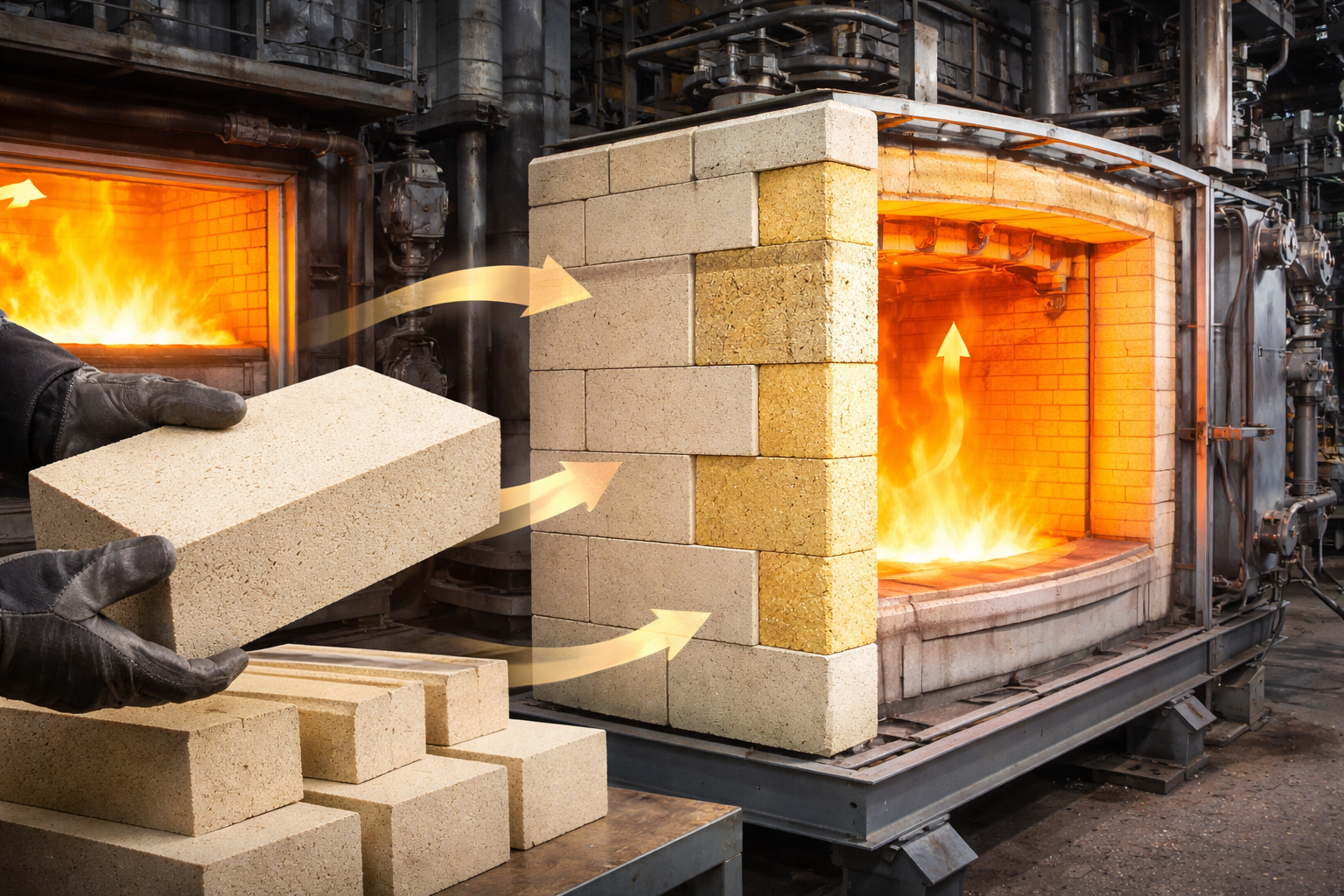
For energy-intensive sectors such as steel, ceramics, glass, and cement, minimizing heat loss is crucial to reduce costs and enhance efficiency. One of the most reliable methods is to utilize thermally insulated bricks, especially those made of clay. Extreme temperatures are a daily occurrence in industrial furnaces; hence, these bricks are crucial inlining them. They are necessary in preserving energy-efficient systems since they can restrict heat flow. Leading Thermal insulation bricks Manufacturers continually improve their clay-based brick technology to meet evolving needs in industrial applications.
Understanding Clay Thermal Insulation Bricks
Specifically manufactured materials designed to provide low heat conductivity while still preserving structural strength at high temperatures are clay-based thermal insulation bricks. Insulation bricks are lighter and more porous than standard dense refractory bricks, allowing them to trap air within their construction. Acting as a natural insulator, this trapped air significantly reduces the material’s ability to pass heat.
Using clay is helpful. Not only is it plentiful and reasonably priced, but when handled correctly by seasoned producers, it generates bricks that mix extended service life with thermal efficiency. For lining the walls, ceilings, and even floors of industrial furnaces, these bricks are perfect.
Energy-Saving Mechanism
Thermal insulating bricks in furnaces mainly serve to lower heat loss from the combustion chamber. Massive heat generation during furnace operation causes any uncovered surface to radiate outward, resulting in energy waste quickly. Acting as a barrier, clay insulation bricks slow down this process by trapping heat inside the furnace.
Consequently, the furnace uses less fuel since it keeps more of the energy it generates. Maintaining the required temperature becomes simpler; furnaces require less energy input to operate continuously. In the long term, this results in reduced operational costs, improved fuel economy, and a lower environmental impact.
The Role of Manufacturers in Performance
This procedure depends much on dependable Thermal insulation bricks Manufacturers. The quality of the materials used, the production technique, and the subsequent requirements all significantly impact the efficiency of the insulation. To ensure the bricks meet specific thermal resistance and load-bearing requirements, established producers control the clay composition, firing temperature, and porosity levels.
Based on the type of furnace and the industrial process involved, they also offer varying sizes, forms, and installation methods, so addressing applications special to them. Industries can guarantee they are obtaining bricks that provide not only energy savings but also durability and constant performance by working with the correct manufacturer.
Conclusion
Using premium clay thermal insulation bricks is a wise investment in industrial furnaces, where running costs are mostly comprised of energy prices. They contribute to long-term sustainability, reduce fuel consumption, and enhance thermal efficiency. Selecting trustworthy Thermal insulation bricks Manufacturers guarantees that these advantages are achieved entirely, therefore enabling sectors to maximize output and control expenses. You can be sure that Jindal Mechno Bricks will make sure that your building projects last because they put great care into every brick they make.