
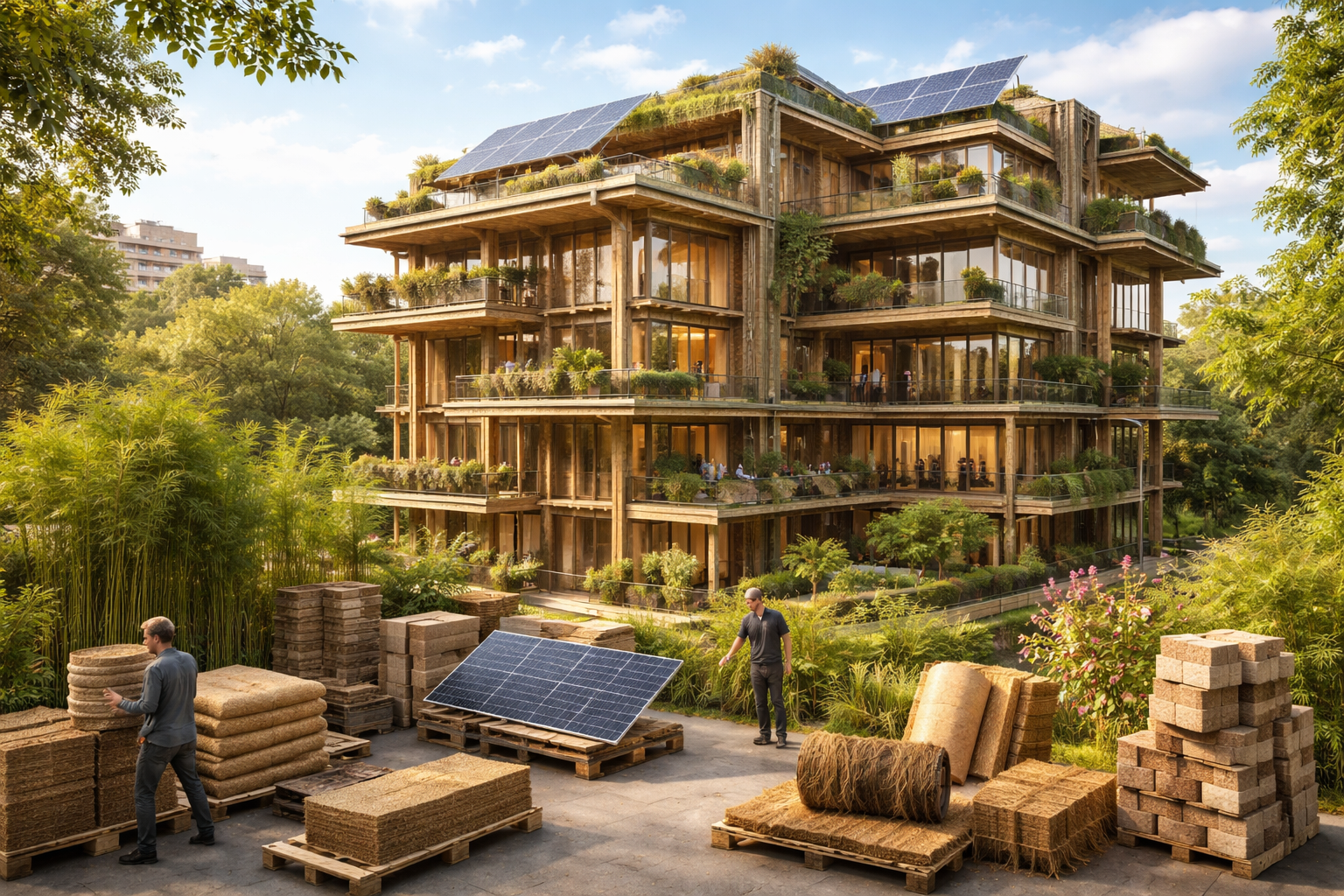
In a time of environmental issues and climate change, the building and design sectors are changing. Sustainability is a need rather than a luxury. Sustainable building materials Manufacturers are at the core of this change. Their inventions are transforming architectural design and the environmental interaction of buildings. Their influence is not limited to offering environmentally friendly substitutes; they also actively shape current architectural identity, building ethics, and environmental responsibility.
Redefining the Materials of the Future
Architecture has depended on traditional materials, including cement, steel, and hardwood, for decades—often resource-intensive and environmentally harmful. Sustainable building materials Manufacturers have developed a new array of choices that significantly lower the carbon footprint of building projects. These include fly ash bricks, rammed earth, reclaimed steel, bamboo, engineered wood, and hempcrete.
These substitutes are more environmentally friendly and somewhat similar—or even better—in strength, thermal insulating ability, and lifetime. This change has allowed builders to create for form and use without compromising environmental factors. Modern building concepts call for materials from the foundation to the façade that provide durability and energy efficiency.
Supporting Eco-Conscious Architectural Design
Modern buildings require increasingly energy-efficient, resource-conscious, and climate-responsive construction. Sustainable building materials Manufacturers are satisfying this need with products that complement green building design objectives. Solar-reflective roof tiles, for instance, help lower urban heat islands, and double-glazed thermal glass helps control internal temperature.
These solutions let architects create smart buildings that maximize natural light and ventilation, save energy, and combine renewable technologies. Consequently, sustainability is included in the first phases of design as a guiding concept rather than a side issue.
Aesthetic Freedom Meets Environmental Ethics
One of the prevalent misunderstandings in the past was that ecological architecture sacrificed beauty. Still, Sustainable building materials Manufacturers have closed that distance. They include materials with rich textures, natural finishes, and custom design features that let builders keep their creative license.
Redefining design trends are recycled wood with distressed finishes, reused brick with industrial appeal, and compressed earth blocks in raw natural tones. This mix of environmentally friendly materials with elegant design inspires a revolution in architecture whereby visual appeal and sustainability coexist.
Strengthening Local Economies and Cultures
The encouragement of local resources is yet another potent method by which Sustainable building materials Manufacturers are changing architecture. Using region-specific, climate-appropriate materials helps manufacturers lower carbon emissions connected to long-distance travel and supports the return of conventional building techniques.
This localization encourages architectural designs firmly anchored in environmental sensibility and cultural legacy. For instance, while helping local companies and artists, mud bricks in Rajasistan, bamboo in Kerala, or volcanic stone in Hawaii, each celebrate native identity and environmental adaptation.
Conclusion
Sustainable building materials Manufacturers are not only providers but also significantly help drive the worldwide movement toward ethical architecture. Through creativity, ethical procurement, and product performance, they empower builders to create visually advanced, environmentally friendly, culturally sensitive buildings. At Jindal Mechno Bricks, with the third generation currently working in the brick-making industry, we have always concentrated on customer satisfaction as the secret to business success.